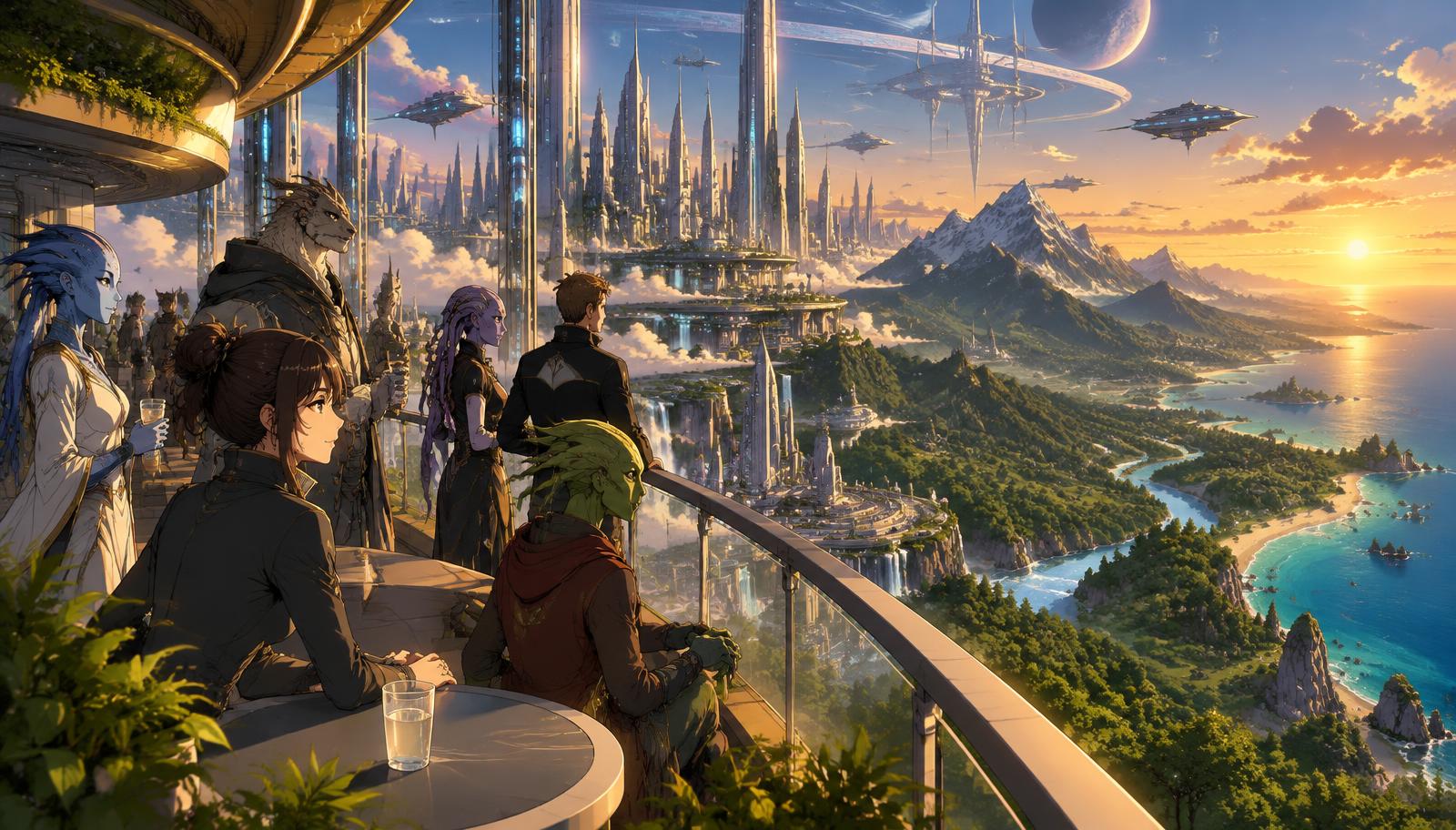
When we decided that Earth would sit at the emotional centre of Super Space Buds, we had to answer an awkward question: what does Earth look like in the year 3455, and why would anyone go to such ridiculous lengths to protect it?
Not a city planet
The easy answer would have been a planet covered in one endless city. We didn't want that. A sterile city world isn't something you'd fight for. It's something you'd escape from.
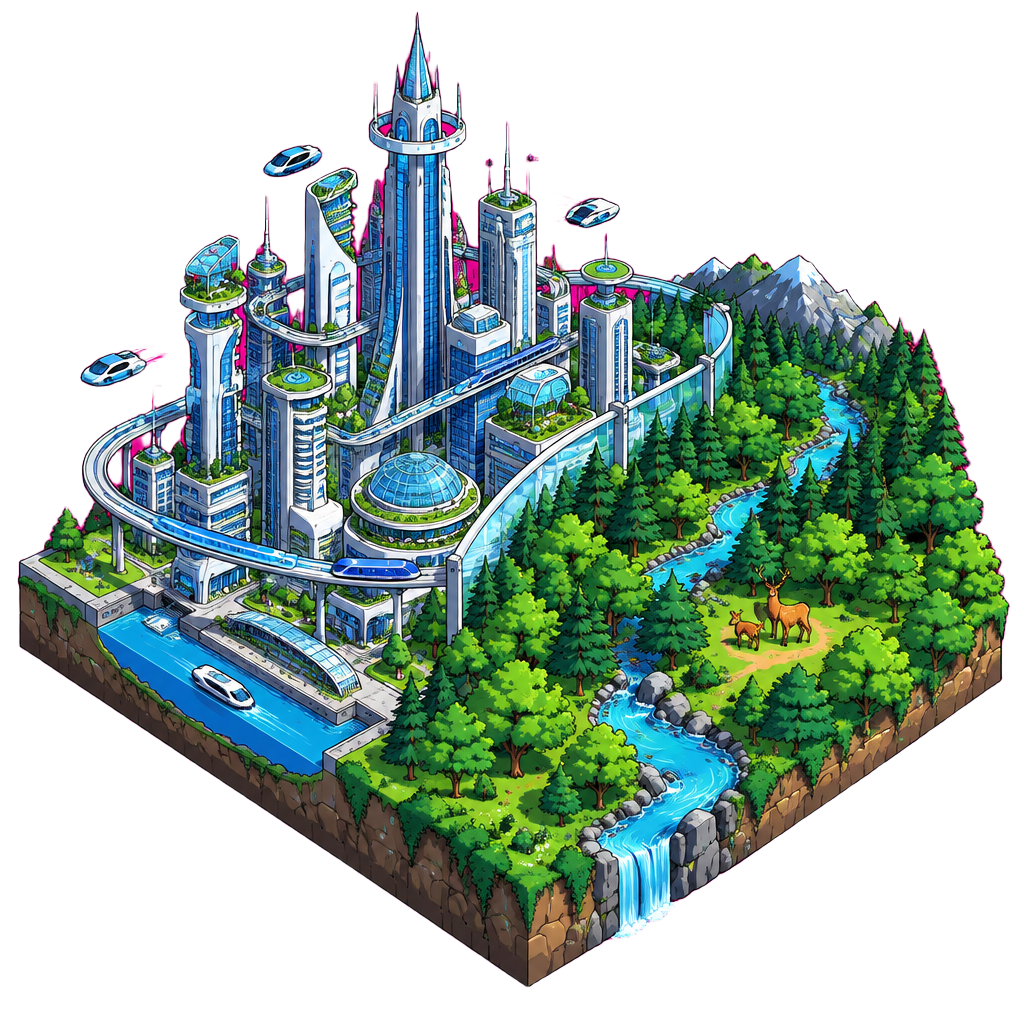
Instead, the Earth of 3455 is a planet of extremes living side by side. In some places it rises into staggering vertical cities: stacked interspecies towers, sky markets and transit spines that climb all the way into orbit. In others, it is wilder than it has been for centuries, with huge national parks, protected oceans, restored forests and mountains that nobody is allowed to build on.
That contrast is the point. Earth is precious because it holds both: the most advanced civilisation in the galaxy and the most carefully protected wild places. It's a balance, and balances can be broken.
A home for many species
Humans aren't alone on Earth anymore. Dozens of alien species live there: families, workers, students and retirees who came for the oceans, the food, the culture or simply the chaos. Some neighbourhoods are almost entirely alien. Some still look like the old Earth, with tiled streets and corner bakeries.
This shapes the kind of threats the crew deal with. A contaminant that harms one species might be harmless to another. A festival for one community might be a security nightmare for another. The show's Earth is a place full of different needs, which makes protecting it complicated, funny and meaningful.
“The galaxy is enormous. Their responsibility is one little blue world.”
Threats that start small
Because Earth is so valuable, most dangers don't arrive as alien battle fleets. They arrive as paperwork mistakes. A mislabelled cargo crate from Ceres turns out to contain a juvenile Meep Rock that will eat a spaceport. A seed pod from Moskura hitches a ride in someone's luggage and starts strangling Earth's gardens. A stolen tide model from Tumbaloo throws off shipping in the Harbor Belts.
This kind of problem is a gift for comedy. It lets the stakes be enormous while the cause is tiny and silly. It also lets Zamfyr overreact magnificently and lets Onobo quietly find the real fix.
Mars, the garage next door
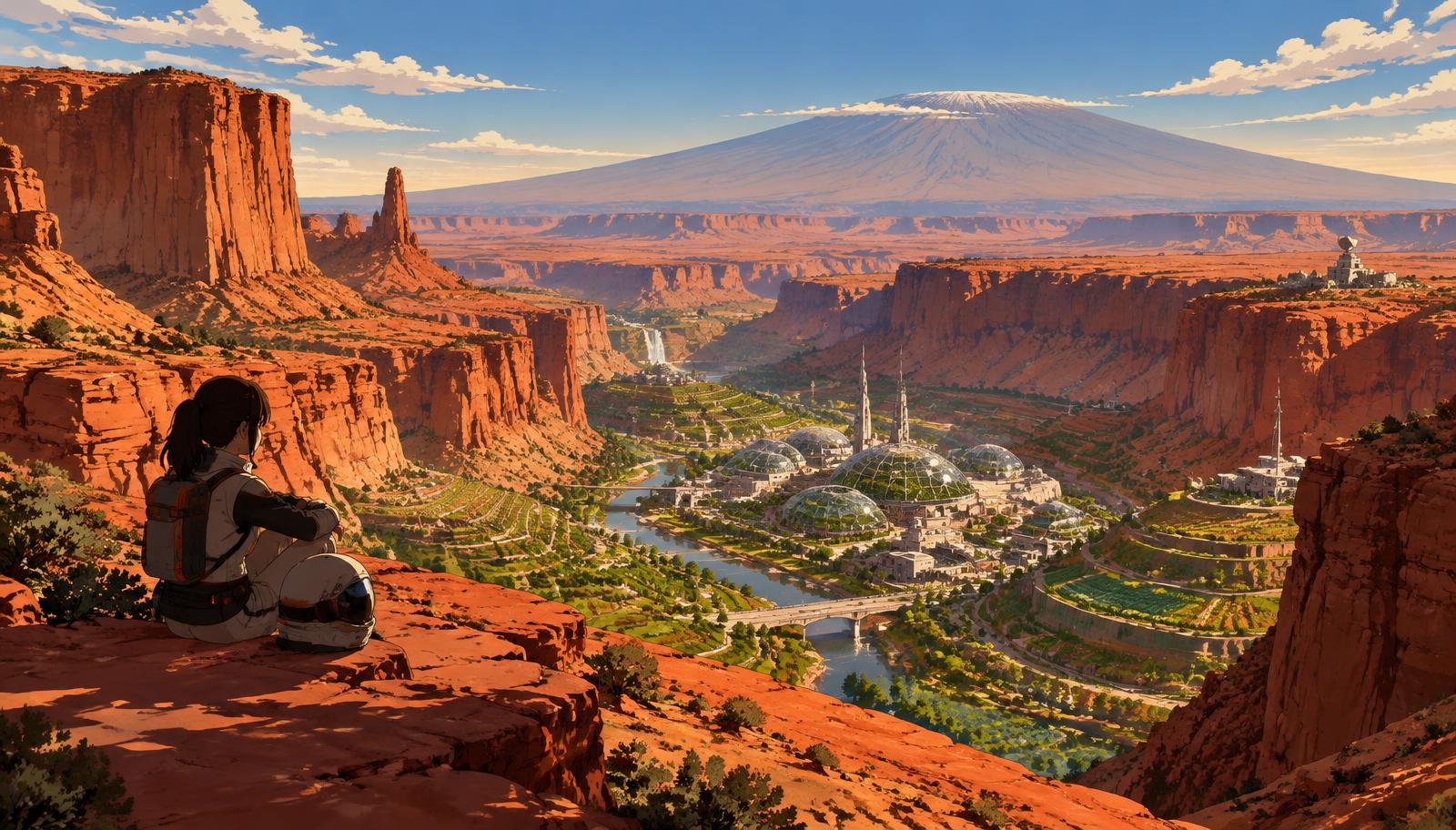
If Earth is home, Mars is the garage. In 3455 it is terraformed and gorgeous, all red sandstone, huge mesas, canyon towns and green valleys, but it is also where the Wobblenaut goes to be repaired, refuelled and occasionally impounded.
We wanted Mars to keep its identity rather than becoming a second Earth. So we lean on its real landmarks. Olympus Mons, the largest volcano in the Solar System, and Valles Marineris, the vast canyon system, are always shown as two separate places. Getting that right matters to us, even in a comedy.
The rest of home turf
The Solar System of 3455 is busy. There are rolling towns on Mercury chasing the day-night line, cloud cities drifting over Venus, dome towns on the Moon, the Ceres Waystation in the asteroid belt, storm scientists orbiting Jupiter, deep research wells on Europa, a gateway station by Saturn's rings, gliding towns on Titan and lonely outposts out to Pluto.
Every one of those places is a possible story, and every one connects back to Earth: the power it uses, the food it eats, the ships that pass its doors.
You can explore all of them in the Atlas, which we keep expanding as the show grows.
Why it matters for the show
Building Earth this way gives Zamfyr and Onobo a reason to keep coming home, and it gives the audience a place to care about. Every far-off adventure has a thread tied back to something precious: a forest, a city, a family, a harbour.
It also gives the show its gentle message without preaching it. Home is worth protecting, it's shared by many kinds of people, and keeping it safe takes a lot of ridiculous, sincere effort. That's a message we're happy to wobble towards.
Life on the Green Boundaries
The protected wild places of Earth are called the Green Boundaries. They are huge, they are strictly protected and they are one of the main reasons offworld cargo is checked so carefully. A single invasive seed could undo decades of restoration, so inspection officers take their jobs very seriously.
That creates friction the show loves to play with. Zamfyr regards customs forms as a personal insult. Earth's traffic authority has banned the Wobblenaut from several landing zones for bad parking. Onobo has quietly memorised every rule, because somebody has to.
Below the high cities, the Old Ground keeps historic neighbourhoods alive: narrow streets, family restaurants, markets and monuments. It's where the crew go to eat, rest and remember what they're fighting for. Some of the most important moments in the show will happen at a kitchen table rather than on a battlefield.
Harbors and orbit
Earth's coasts are lined with the Harbor Belts, vast ports where ocean trade, floating neighbourhoods and marine reserves meet. Above them, the Orbital Approaches handle a constant stream of ships arriving from across the galaxy, and every one of them is a possible source of trouble.
This is the layered Earth we want audiences to fall in love with: crowded, busy, beautiful and fragile. It's a world worth an absurd amount of effort.
Follow along
Want new posts as they land? Use the newsletter form at the bottom of the page.