Worlds · November 1, 2026 · 4 min read
The Atlas: from Mercury's rolling towns to Zyndrel's diamond hail
The Atlas is one of our favourite parts of building Super Space Buds. It's where the galaxy gets its shape: every planet in our own Solar System, the established worlds of the show and a growing list of stranger places. Here's how we think about them.
Every world needs a job
The first rule of the Atlas is that every world has to earn its place. It needs a look you can recognise in one frame, a danger that makes it interesting, a local culture that makes it funny and, most importantly, a link back to Earth.
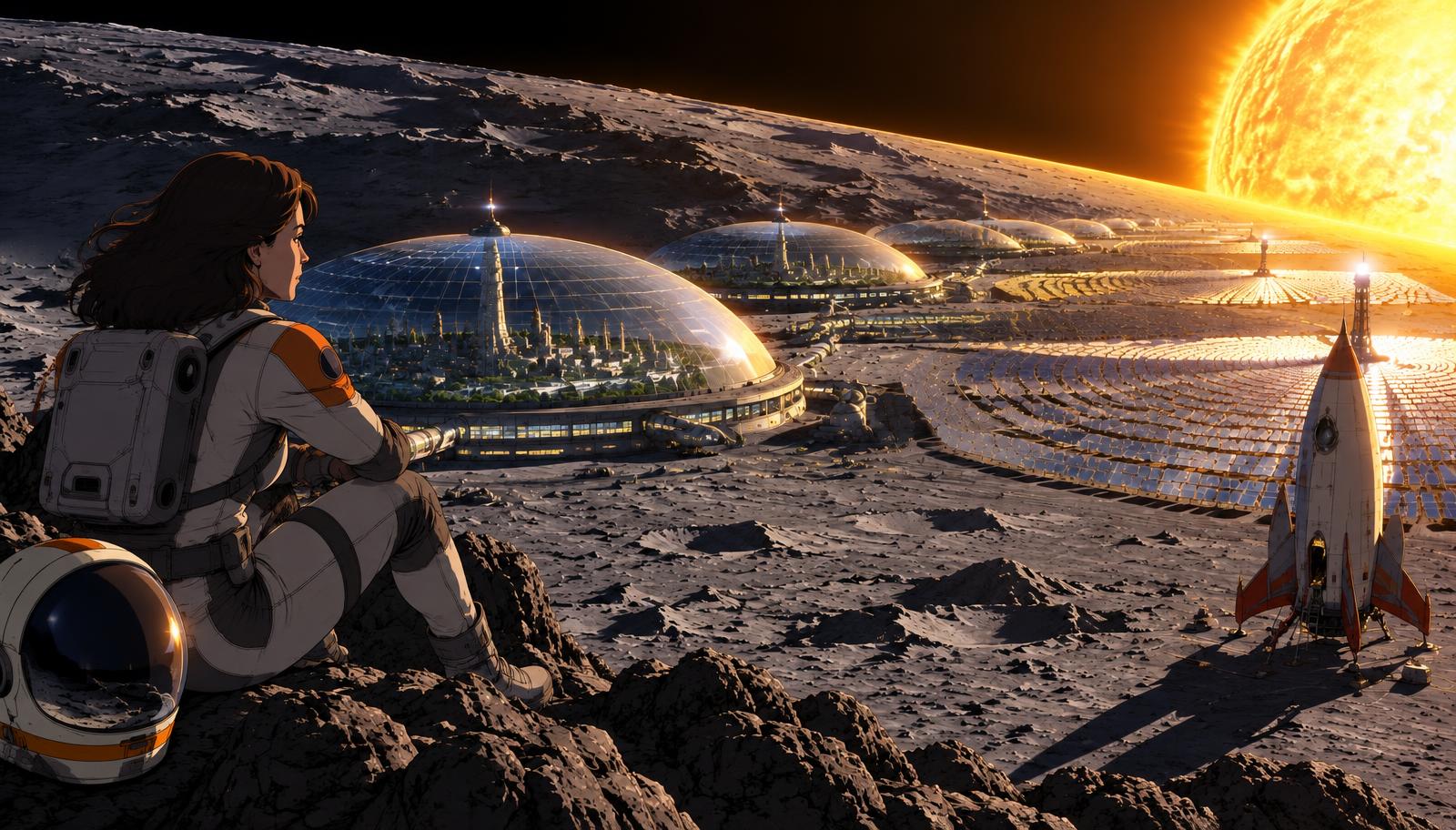
That link is what turns a pretty planet into a story. Mercury's solar fields power Earth's cities. Venus's sky farms grow food so Earth's wild places can stay wild. Zyndrel's light-crystals focus Earth's weather shield. If something goes wrong on any of those worlds, Earth feels it.
Starting with real science
We love real space science, and we use it as a springboard. Mercury really does swing between scorching days and freezing nights, so its towns roll slowly along the line between them. Venus really has a crushing surface and milder upper clouds, so people live in floating cities. Uranus really does spin on its side, so its seasons last for decades.
Each Atlas page has a short science note explaining what's real and what's invented. We're careful never to claim that a fictional world is a real discovery. The fun comes from asking 'what if?' and then letting the characters loose.
The diamond planet
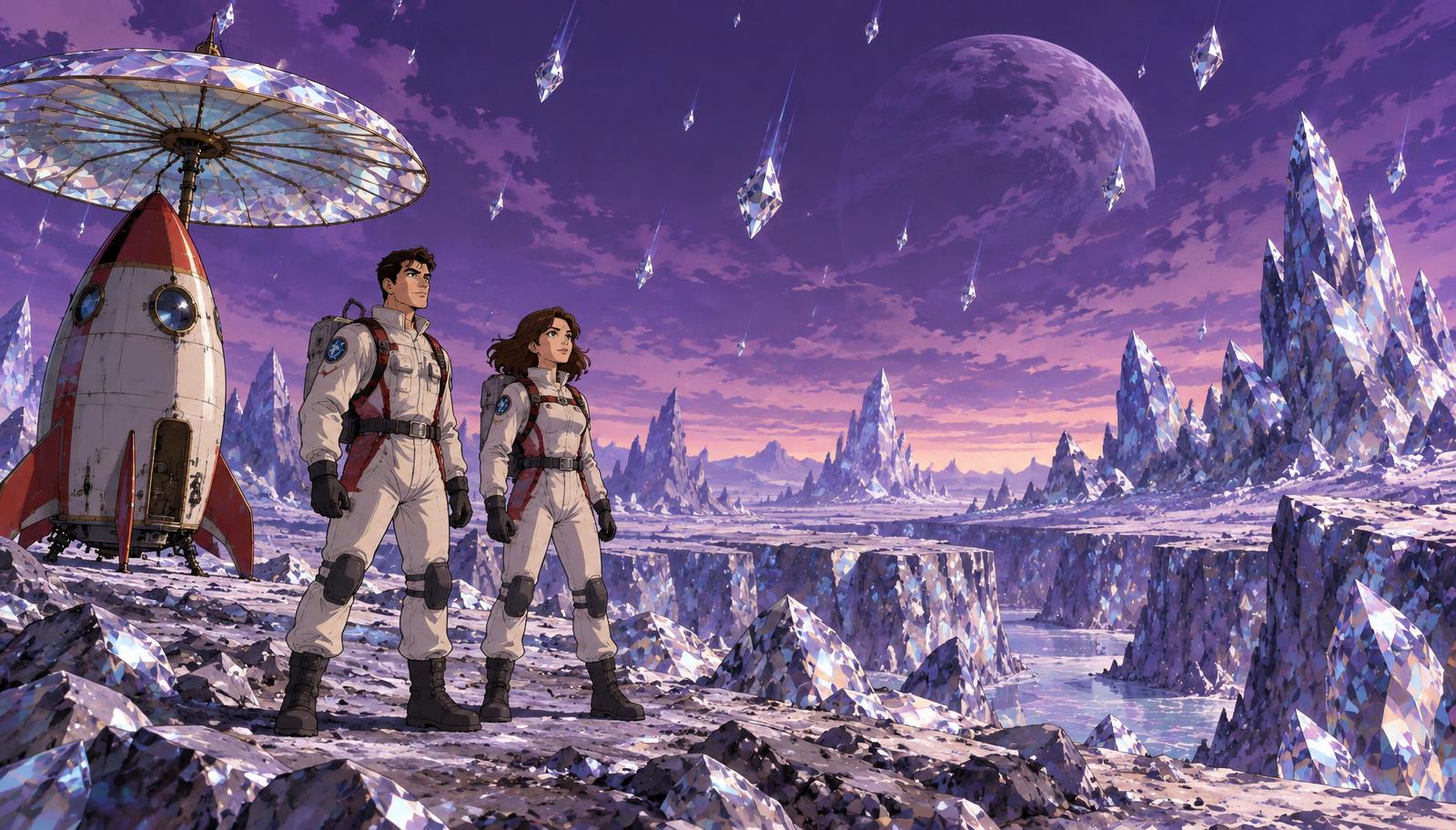
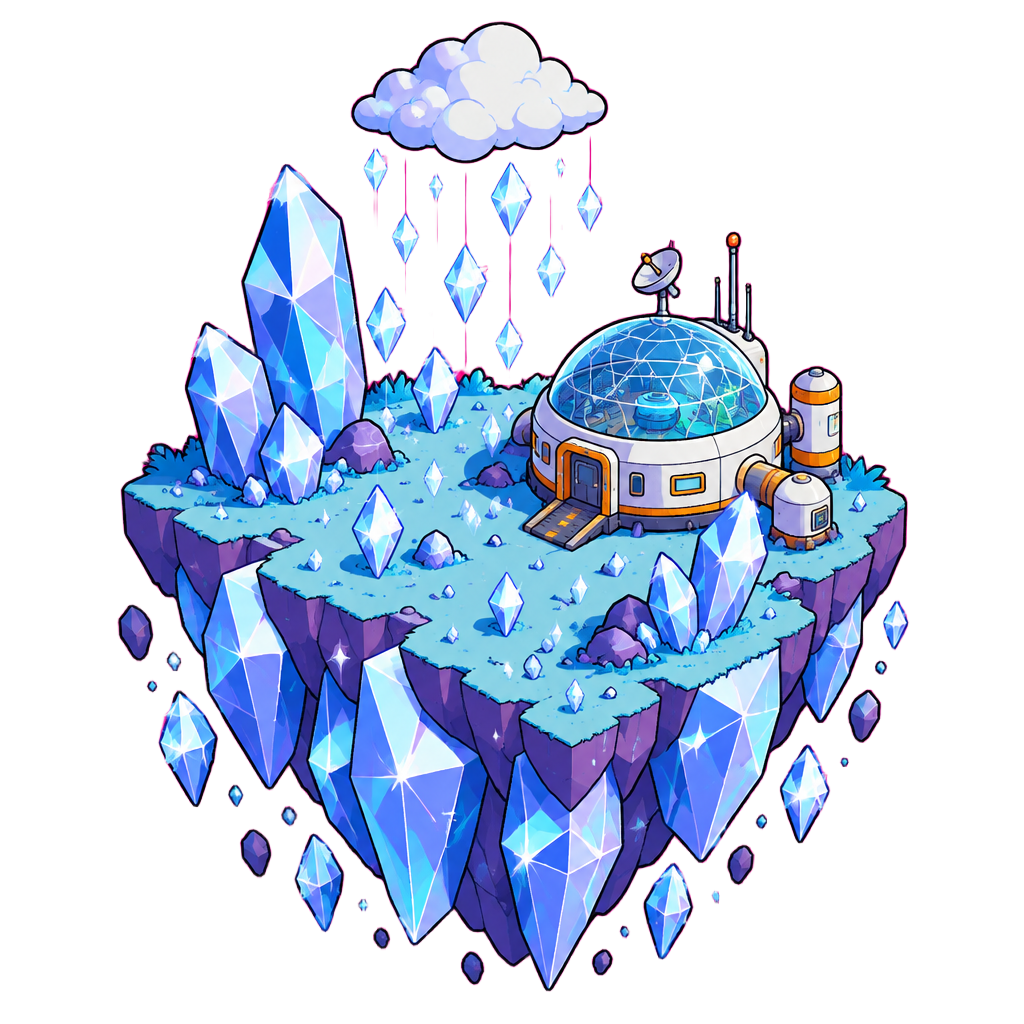
Zyndrel is our diamond world: a planet whose crust is glittering carbon crystal and whose violet storms rain diamond hail. Diamonds lie around like gravel, which means they're worth less than sand. Literally. The locals pay for things with sand.
It's inspired by real scientific ideas: researchers think diamonds may form and fall deep inside Uranus and Neptune, and astronomers have speculated about carbon-rich 'diamond planets'. No real diamond planet has been confirmed. Zyndrel is our playful what-if.
It's also the setting for one of our favourite story ideas, 'Diamond Misunderstanding', in which Zamfyr fills the Wobblenaut's hold with diamonds, convinced he's made the crew rich, and then can't take off because the ship is too heavy.
“On Zyndrel, diamonds are worth less than sand. Zamfyr did not read the brochure.”
Meeps, rocks and Brimmock
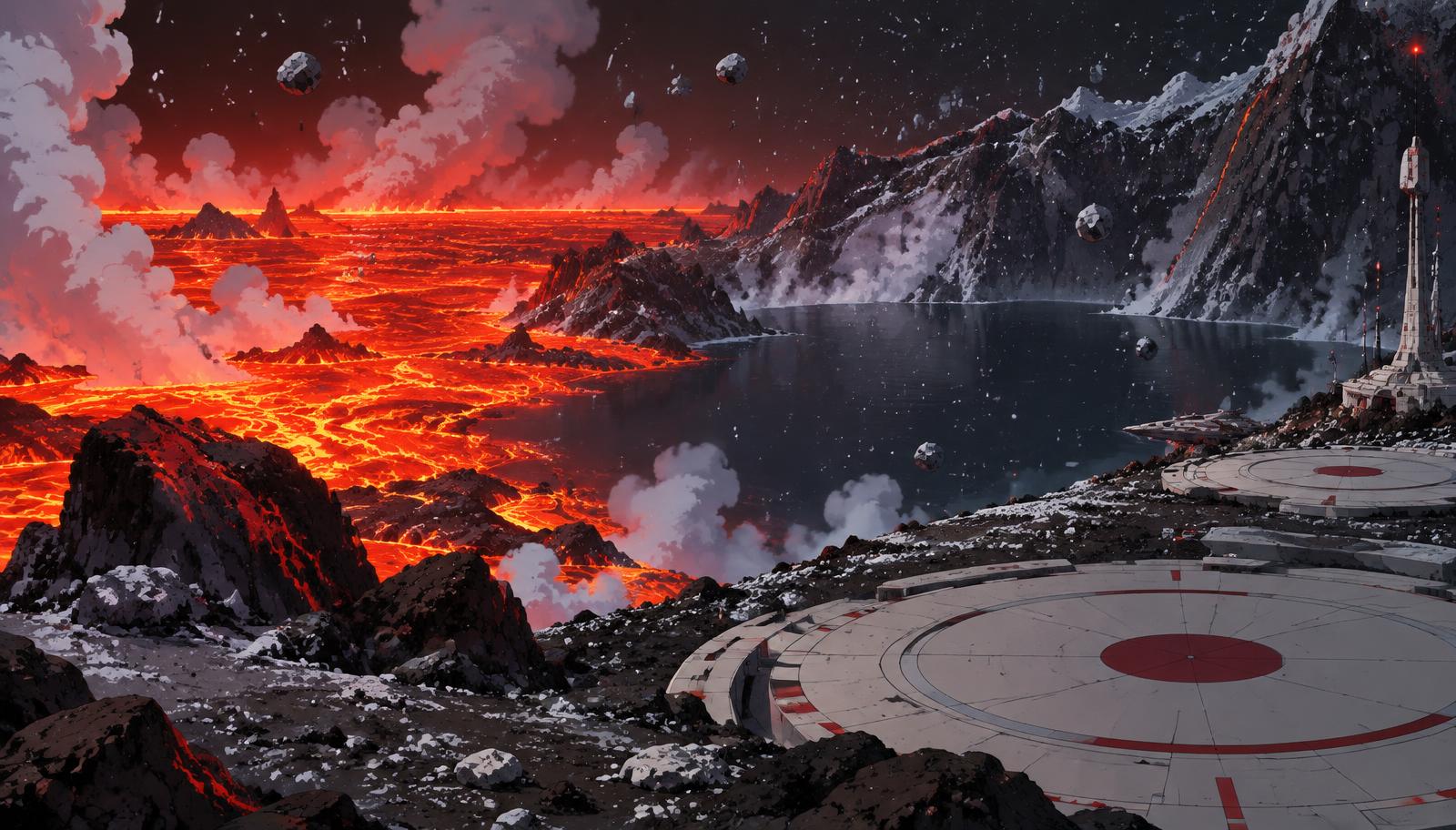
Brimmock is a lava world where boiled rock rises into the sky and falls back as stone rain. For most visitors that's a nightmare. For Meep Rocks it's paradise: an endless free buffet falling from above.
That's why Brimmock has the biggest Meep population in the galaxy. Thousands of young Meeps crunch through the gravel drifts while giant adult Meeps float overhead, catching boulders mid-fall. It's one endless cycle of chewing, growing and meeping.
A galaxy, not beyond it
One firm rule shapes the whole Atlas: everything happens inside our own galaxy, which characters simply call THE GALAXY. Nobody has ever made a confirmed trip to another galaxy. That keeps the scale huge but understandable, and keeps the mysteries, like the Googleplex at the galactic centre, feeling special.
The galaxy map on the Atlas page shows the Solar System where it really sits, out on one of the spiral arms. The other worlds are placed for the story, not from a real star chart.
Still growing
The Atlas keeps evolving. Names change when they don't feel right. Some worlds have been merged, a few have been removed and new ones keep appearing. That's how it should be for a show in development.
If you only visit one part of the site, make it the Atlas. Each world page is packed with regions, locals, customs, legends, crew logs and story ideas, and every one of them is a door to an adventure.
The established worlds
Alongside the Solar System, the show has a core set of established worlds, each with a signature region. Baskaroon is home to the Desert Monoliths, giant stones that hum during electrical dust storms. Oolamara hides the Deepwater World, an ocean planet of floating ports and pressure-layer cities. Shiveraz is crowned with the Frozen Spires, needles of ice beneath dancing auroras.
Kryvax carries the Crystal Shelf, fragile prismatic cliffs and cities built on mineral ledges. Moskura holds the Glowing Canopy, a multi-level rainforest of luminous leaves and drifting spores, and the perfect hiding place for a suspicious Kye who might be a Qu'ah.
Beyond them lie stranger places: Tumbaloo with its swinging tides, Vesperon's endless dusk, Haldreth's pressure-supported Core Bastion deep inside a gas giant, Velgora's heavy meadows, Korumbra's ring-fall corridor, Floopadoon's hanging forests, Rogoboo drifting in the dark, and Tiltrenne with its decades-long seasons.
Onobo's survival kit
Visiting these worlds needs gear, and that's Onobo's department. His survival kit, which lives aboard the Wobblenaut, includes a gravity normaliser for heavy worlds, a pressure envelope for deep dives, a thermal veil for heat, an inertial anchor for storms, phase sensors, a tide-clock and a core-diver rig.
Every gadget has hard limits and a very specific way of going wrong, usually when Zamfyr touches it. You can try them out on the Wobblenaut page.
Follow along
Want new posts as they land? Use the newsletter form at the bottom of the page.